Safes move more often than you might expect. An office closes or relocates, a family inherits one, a shop changes hands, or somebody buys a gun cabinet that has to be fitted properly at the other end. Van hire for a safe is a job defined by one number, which is the weight, and by one problem, which is that the thing has no handholds and does not care about your floor. Booking van hire in Warrington is the simplest part of the day.
Find Out the Weight Before Anything Else
Safes are built from thick steel plate and frequently filled with a concrete composite between the layers, which is exactly what makes them heavy out of proportion to their size. A modest domestic safe that two people can shuffle across a floor is one thing. A commercial floor standing unit the size of a filing cabinet can weigh several hundred kilograms and is beyond what any number of people should be lifting by hand. Get the manufacturer’s weight from a plate, a manual or the model number before you plan anything, because every other decision follows from it and guessing at this stage is how people end up with a safe stuck halfway through a doorway.
Why the Lift Matters More Than the Load
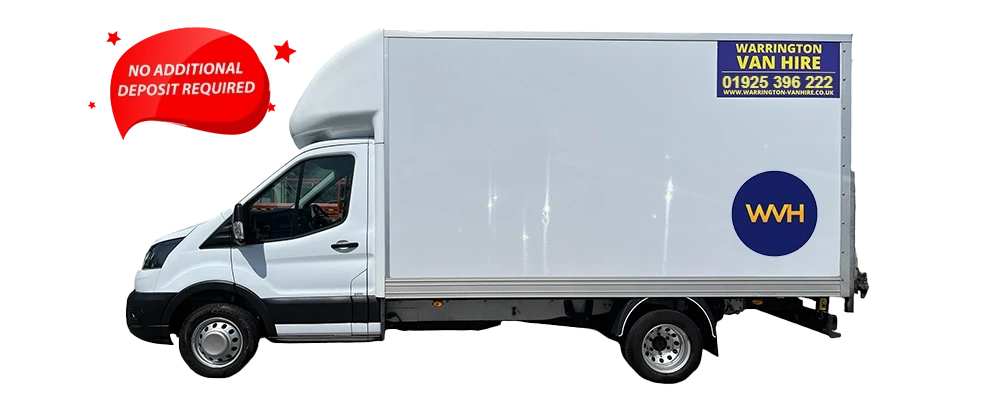
A safe is well within what our vehicles can carry. The difficulty is entirely in getting it up into one and back out again. Lifting several hundred kilograms of steel over a tailgate is not something to attempt, and a ramp is little better because a safe on a slope wants to go downhill and cannot be steered. The Luton van with tail lift is the right body for this work, because the safe goes onto the platform at ground level on a heavy duty sack barrow or a pallet truck and rises mechanically. Everything we run sits within three and a half tonnes gross vehicle weight and is driveable on a standard category B car licence.
Floor Loading at Both Ends
This is the consideration people miss entirely. A heavy safe concentrates its whole weight onto four small feet, which is a serious point load on a floor. Ground floor concrete is generally fine. Suspended timber floors, upstairs rooms and older properties deserve real thought, and a loft conversion or a first floor office is a question for someone qualified rather than an optimistic guess. Spreading the load across a steel plate or a sheet of thick ply helps, but it does not turn an unsuitable floor into a suitable one. Decide where the safe is going before it arrives rather than after it is through the front door.
Moving It Without Wrecking the Route
A safe will destroy a floor covering if it is dragged, and the feet will gouge timber, tile and vinyl without any difficulty at all. Board the whole route rather than protecting a few obvious spots, and move the unit on a barrow or rollers rather than walking it corner to corner, which is slow and puts enormous pressure on each foot in turn. Keep the door of the safe locked shut and the key elsewhere, because a heavy door swinging open mid move shifts the centre of gravity suddenly and is the classic way one goes over. If it has removable shelves, take them out first, along with any loose internal drawer or tray, since those slide about inside and shift the balance exactly when you least want it to change.
Being Sensible About Who Knows
A safe is a container for things worth protecting, and moving one advertises that. Keep the operation low key. There is no need to leave the unit standing on a driveway while you have a cup of tea, and no need to discuss what will be going in it with everyone who happens to be passing. Move the contents separately and beforehand rather than transporting a loaded safe, which is both considerably heavier and a far worse idea for reasons that do not need spelling out. If you are collecting a second hand unit, arrange the change of combination or the replacement of locks before you rely on it rather than months later, because whoever owned it previously has no reason to have forgotten the code.
Access, Timing and the Collection
Commercial premises frequently restrict when heavy items can be moved, particularly in shared buildings with a lift and a goods entrance, so confirm the window before you book. Our depot on Tilley Street at the main entrance to Cockhedge Shopping Centre beside Asda is open Monday to Saturday from 8am to 4pm and closed on Sunday. Bring your photocard licence and a DVLA check code, no deposit is needed on most of our vehicles, and there is free secure parking on site for your car. Customers moving units to and from business premises around Burtonwood van hire bookings and the surrounding industrial estates usually find a mid morning collection avoids the worst of the yard traffic. You can talk the job through with the team via our contact us page.
Tell us the weight of the safe and whether either end has a loading bay or a lift, and we will make sure the vehicle suits the lifting rather than only the carrying. Call the depot on 01925 396 222 before you fix a date with anyone else.