
Gross vehicle weight is the figure that decides how much you can legally carry in a hire van. Most customers think about floor space first, yet weight is what catches people out on moving day. Because every vehicle we offer for van hire in Warrington is plated at 3.5 tonnes or under, the same rule applies across the fleet. This guide explains what that means when you load up.
What the 3.5 Tonne Limit Means in Practice
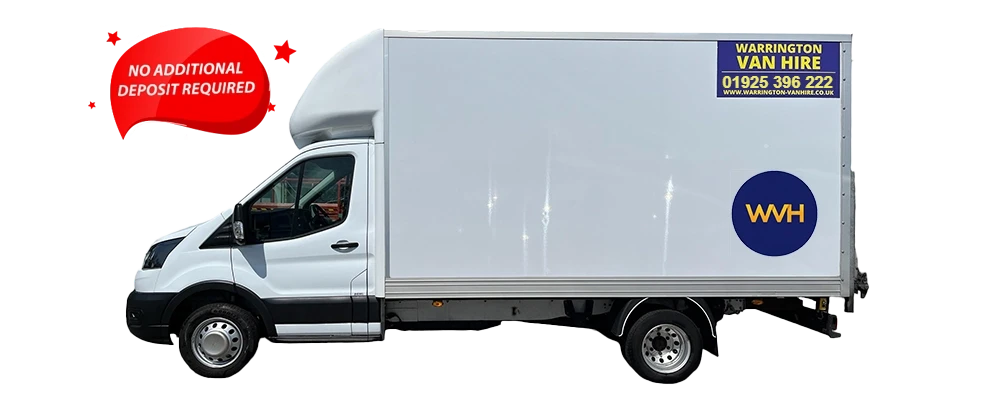
The plated limit covers everything on the road at once. That means the van itself, the fuel, the driver, any passengers and the load all count together. So a bigger van does not always carry more weight, because a larger body weighs more before you put anything in it.
This is why two vans with the same limit can suit very different jobs. A compact panel van has less space but a lighter body. A Luton, meanwhile, offers a huge box that fills up with light, bulky furniture long before weight becomes a problem. Dense loads are the ones to watch. So the first question is never how big the van is. Instead, ask how heavy the load will be.
Why Gross Vehicle Weight Matters for Your Licence
A standard category B car licence covers vehicles up to 3.5 tonnes. Therefore, every van on our fleet can be driven on an ordinary car licence, from the smallest panel van to the Luton. You do not need a separate test or an extra category to hire from us.
However, the licence only covers the van while it stays within its plated limit. Once a van is overloaded, the driver is responsible, not the hire company. Roadside checks can happen on any main route, so it pays to load with care. An overloaded van also takes longer to stop and wears its tyres faster.
Loads That Reach the Limit Sooner Than You Expect
Furniture rarely causes trouble, because it is mostly air. Building materials are different. Paving slabs, bags of sand, plasterboard, tiles and soil are compact and very heavy, so a van can look half empty and still be at its limit.
The same applies to paper archives, books, gym weight plates and engine parts. If your load is small but hard to lift, treat it as a weight job. In that case, tell us what you are moving when you book, and we will talk through whether one trip or two makes more sense. Two lighter runs are always safer than one heavy one.
Choosing a Van With Gross Vehicle Weight in Mind
For dense trade materials, a lighter body leaves more of the limit for the load. A short wheelbase medium roof van is a sensible choice for tiles, tools and boxed goods, and it is easy to park on a tight driveway. For long loads such as timber, the extra long wheelbase van gives a 4.3 metre load length.
Loose or palletised materials often suit a flatbed dropside van instead. The sides fold down, so a merchant’s forklift can load from either side. For house moves, where volume matters more than weight, a Luton van with tail lift is usually the right answer.
How to Load So the Weight Sits Safely
Staying under the limit is only half the job, because where the weight sits also matters. First, place the heaviest items on the floor, as far forward as you can, against the bulkhead. Next, spread the load evenly from side to side so the van does not lean in corners.
Avoid stacking heavy items behind the rear axle, since that lifts weight off the front wheels and makes the steering feel light. Then strap everything down before you move. A heavy load that slides under braking is far more dangerous than a light one. Finally, check the tyres look evenly loaded before you pull away.
Checking Your Load Before You Set Off
Builders’ merchants print the weight of bagged and palletised goods on the delivery note, so add those figures up before you collect. For mixed loads, a public weighbridge gives a clear answer, although a careful estimate is enough for most domestic jobs.
If the total looks close, split the job into two runs instead. Our depot at Cockhedge Shopping Centre is central, so a second trip to the trade counters along Winwick Road adds little time. That is always quicker than dealing with an overloaded van at the roadside. It also keeps the drive home calm and predictable.
Collecting Your Van From the Depot
We open Monday to Saturday from 8am to 4pm and close on Sundays. Bring your photocard licence and a DVLA check code when you collect. Most of our vehicles need no deposit, and there is free secure car parking on site while you are out with the van.
Before you leave, we show you where the weight plate sits inside the cab door, so you can see the limit for yourself. We also point out the tie-down points in the load area. Customers also travel in from further afield, and we regularly arrange van hire Widnes tradespeople use for merchant runs. Our van hire FAQs cover the common questions as well.
Tell us what you plan to carry, and we will help you choose a van that handles the gross vehicle weight of the job comfortably. Call the depot on 01925 396 222 and we will talk it through before you book.
