
Payload is the one figure many people forget when they book a van. They check whether the load will fit, yet never ask whether the van can legally carry its weight. On a 3.5 tonne vehicle, load space and load weight are very different things. So, if you plan van hire in Warrington for anything dense, it pays to understand this before you start loading.
Gross Weight, Kerb Weight and Payload
Every van has a gross vehicle weight, the most it may weigh fully loaded. Subtract the kerb weight, which is the van itself with fuel and fluids. What remains is your payload, the cargo weight you can add.
On a 3.5 tonne van, that figure runs out faster than most people expect. Our explainer on gross vehicle weight explained covers the legal side. In addition, the official GOV.UK vehicle weights explained page sets out the terms.
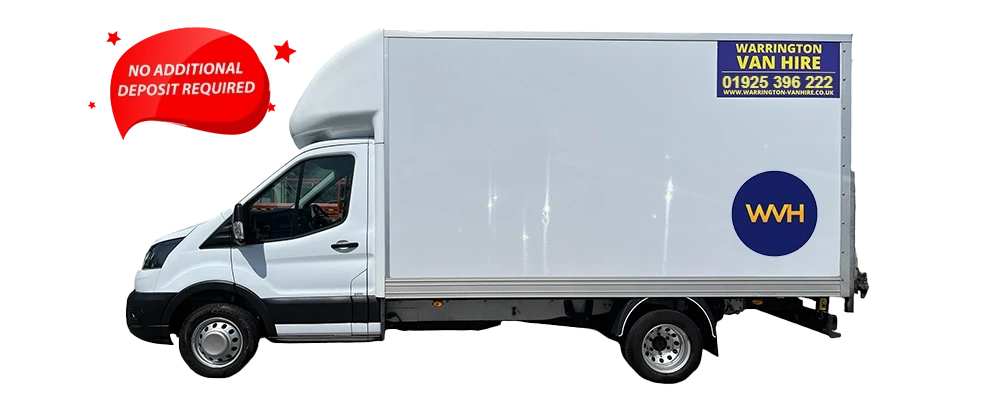
Examples That Surprise People
Plasterboard is heavier than it looks, and a large stack soon adds up. Paving slabs are worse still. In fact, a modest patio’s worth of flags can use most of a van’s capacity while barely covering the floor.
White goods work the other way. They are bulky but fairly light, so you run out of space long before weight. Knowing which type your load is tells you which limit matters.
Spreading the Load Within the Payload
Even a legal load can be dangerous if it sits over the rear axle. Instead, keep heavy items low and forward, near the bulkhead. Otherwise, a tail-heavy van steers vaguely and brakes poorly, especially on fast slip roads onto the M6 and M62.
Choosing a Van for Dense Loads
For heavy, compact loads, a smaller van can be the better choice. A short wheelbase medium roof van handles easily, and it removes the temptation to keep piling weight into spare space. Meanwhile, bulkier, lighter jobs suit the larger panel vans.
Customers collecting from yards toward Frodsham van hire areas weigh up exactly this trade-off. Our guide on how to load a hire van safely adds more practical tips.
Ask Before You Overload
The honest answer to most payload questions is that it depends on what you carry. So, we would rather you asked than guessed. Call 01925 396 222 and describe your load, and we will suggest a suitable van. Alternatively, use the contact us page.
